If your report says “offset,” this is the section to read carefully. It is the single word that sells the most unnecessary sewer replacements in Colorado.
We’re certified under the NASSCO building sewer and drain inspection standard, which is the national standard for how these inspections are coded. Under that standard, a displaced joint comes in three distinct forms:
- Offset — the end of one pipe no longer sits in line with the pipe it feeds into.
- Separated — the two pipes have pulled apart lengthwise, leaving a gap between them.
- Angular — the two pipes don’t run dead straight into one another, so part of the joint opens up.
Three different conditions. One word — the most alarming of the three — gets used for all of them.
Most of what gets called an offset is an angle somebody built on purpose
Clay tile was laid in short sections with a fitting at every joint, and those fittings have real movement built into them. That movement is how the original crew steered the line — around a tree, past a foundation, down to meet the city main at the right grade.
And when they steered it, the joint opens up on the opposite side:
- Moving the pipe left — the joint appears open on the right
- Moving it right — open on the left
- Aiming it down — open on the top
- Tipping it up — open on the bottom
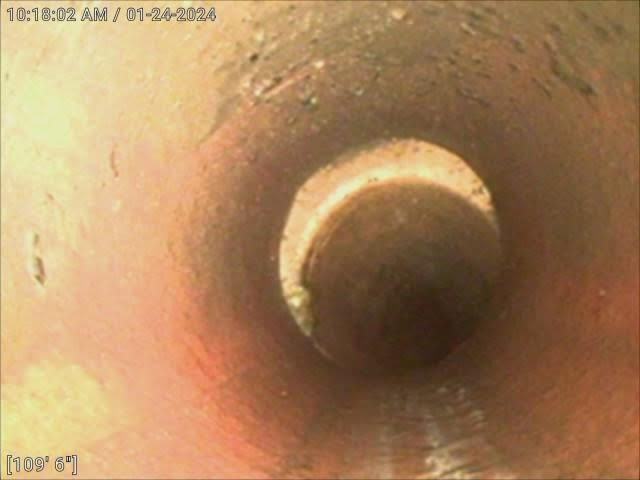
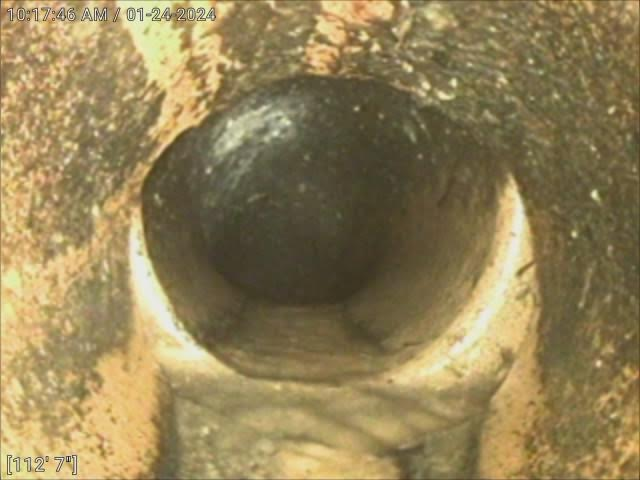
Neither of those pipes is broken. They are a record of the day the line went in the ground, and they have worked exactly as intended ever since.
The second question nobody asks
Even where a joint really is displaced, the standard doesn’t treat that as a defect on its own. The test is whether the displacement is significant enough that the joint stops doing its job — which is to seal two lengths of pipe together and keep groundwater out and sewage in.
A joint that still seals is a joint. It isn’t a reason to dig up your yard.
So there are two questions to put to any “offset” on your report, and most people never get to ask either one:
- Is it actually an offset — or is it an angular joint, where somebody steered the line?
- Is it bad enough to stop the joint sealing, or is it simply a joint?
A true offset is a different thing — and it is a real defect
We won’t soften this one. A true offset is a pipe that has broken or separated through structural failure — one section dropped out of line with the next. That is a genuine defect and it requires repair. Cleaning will not fix it, we don’t do repairs, and we will tell you plainly when that’s what you’ve got.
How to tell them apart in two seconds
Look at what’s on the far side of the gap.
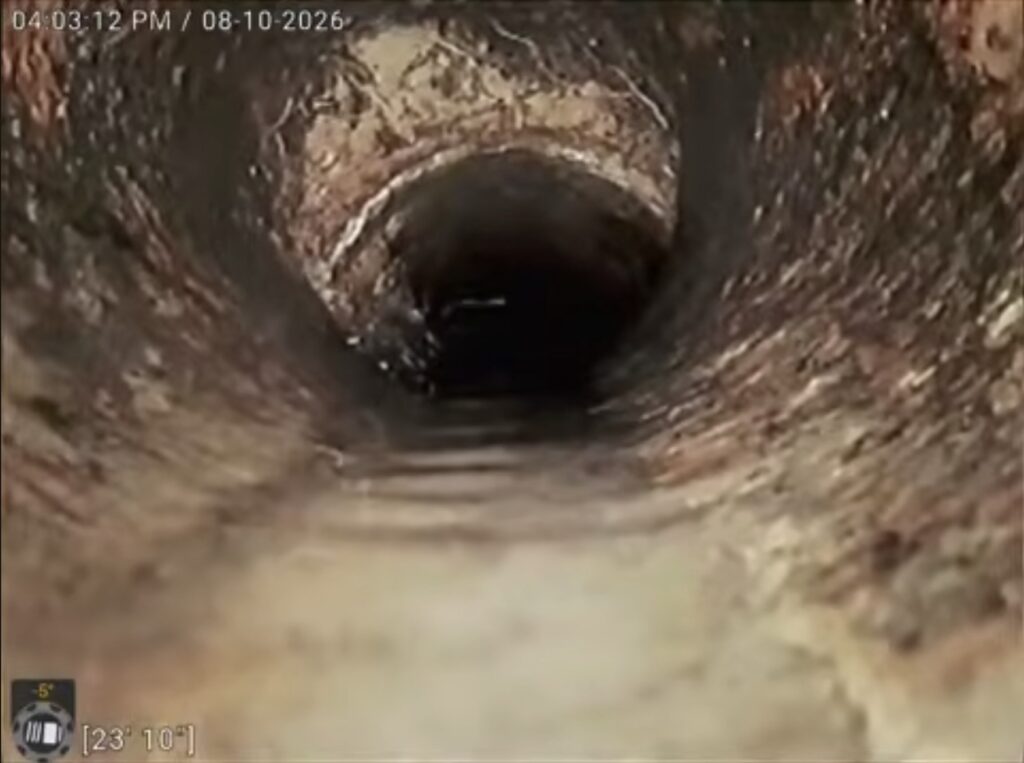
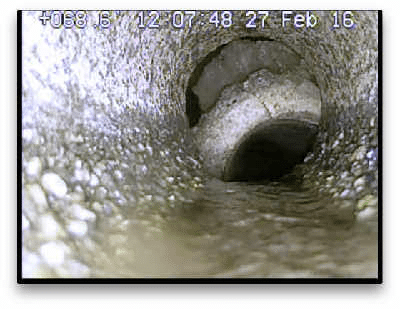
If you can see pipe, you’re looking at a fitting doing the job it was made to do. If you can see dirt, you’re looking at a defect.
That one difference can be worth tens of thousands of dollars, and you can check it yourself on footage you already own — which is exactly why we hand you the video.